Reset filters
Timeframe

Narrow the historical window

Filter the written timeline by event type and date range.

MvR born

MvR born

Der rote Kampfflieger von Rittmeister Manfred Freiherrn von Richthofen, 1917, 351.000 - 400.000, Verlag Ullstein & Co, Berlin-Wien p. 10
May 2, 1892
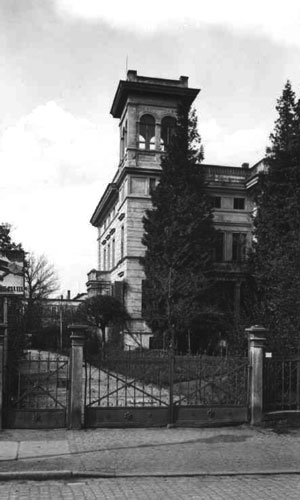
Powstancow Slaskich 92-94, Borek Wroclaw
Borek
Kleinburg
‘Now about my youth. The old man was in Breslau with the Leibkürasseren 1 when I was born on 2 May 1892. We lived in Kleinburg.’
Manfred von Richthofen, two years old

Manfred von Richthofen, two years old

Die Erinnerungen der Mutter des roten Kampffliegers Kunigunde Freifrau von Richthofen. Im Verlag Ullstein - Berlin, 1937. p. 8
May 2, 1894
Borek
Kleinburg
This picture shows Manfred von Richthofen as a child, about two or three years old.
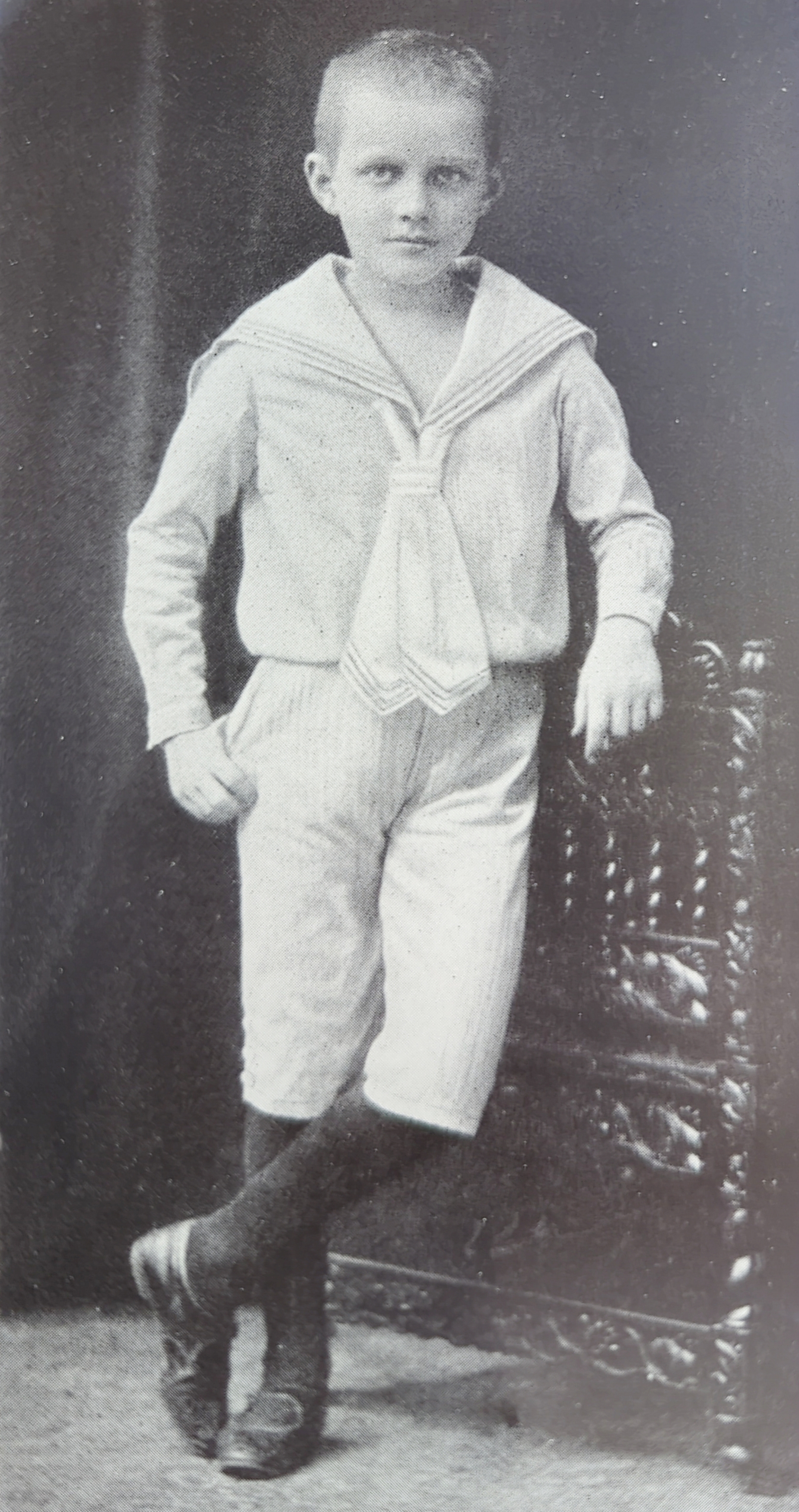
Manfred von Richthofen is seven years old

Manfred von Richthofen is seven years old

Die Erinnerungen der Mutter des roten Kampffliegers Kunigunde Freifrau von Richthofen. Im Verlag Ullstein - Berlin, 1937. p. 8
May 2, 1899
Borek
Kleinburg
This picture shows Manfred von Richthofen as a child, around the age of seven. He is wearing a sailor suit, which was very fashionable at the time.

MvR eight years old

Der rote Kampfflieger von Rittmeister Manfred Freiherrn von Richthofen, 1933, Eingeleitet und ergänzt von Bolko Freiherr von Richthofen, mit einem Vorwort von Generalfeldmarschall Hermann Göring, Verlag Ullstein & Co, Berlin
May 2, 1900
Powstancow Slaskich 92-94, Borek Wroclaw
Borek
Kleinburg
When he was eight years old, he climbed the largest apple trees on the estate, which hardly anyone else could reach. But then he didn't let himself down from the trunk, but from the outside on the branches, grasping them with the greatest dexterity. My parents often watched him do this, but never had the feeling that anything could happen to him, so sure were all his movements. My mother was never at all anxious with us boys. She was of the opinion that children could only be really skilful and able to cope with all dangers if they were given every conceivable physical freedom of movement. Only then would they be able to judge as accurately as possible what they could trust themselves to do. Of course, this has not always been without incident, but nothing more serious has ever happened.

I did that myself

Der rote Kampfflieger von Rittmeister Manfred Freiherrn von Richthofen, 1933, Eingeleitet und ergänzt von Bolko Freiherr von Richthofen, mit einem Vorwort von Generalfeldmarschall Hermann Göring, Verlag Ullstein & Co, Berlin
May 2, 1900
Powstancow Slaskich 92-94, Borek Wroclaw
Borek
Kleinburg
"Because from the earliest days of his youth, Manfred had already shown samples of unusual energy. As an eight-year-old boy, my parents were expecting him one day from the railway in Wroclaw. He was to return from a long stay in the country with two large suitcases. The boy was sent to the railway station to be picked up and returned alone. Manfred was nowhere to be found. What had happened? There was no telephone back then. The excitement grew. While my parents were still discussing it, the doorbell rang and Manfred was standing safely at the door with both suitcases. ‘You must have taken a taxi?’. ‘No, I didn't have any money.’ ‘Who carried the suitcases for you?’ ‘I did that myself.’ My parents were speechless and incredulous, because the suitcases were so heavy that Manfred would have had trouble lifting just one. But then they got the answer. ‘I was already able to lift one, I always carried it a bit and looked after the other one in the meantime, then I picked up the second one, and that's how I gradually got there, unfortunately it took a bit of time.’ And all this with such natural calm and confidence that even then my parents could confidently leave Manfred to look after himself on the whole."

Mrs. von Richthofen on child development

The Red Knight of Germany, the story of Baron von Richthofen, Floyd Gibbons, 1927, 1959 Bantam Books p. 7
May 2, 1900
Powstancow Slaskich 92-94, Borek Wroclaw
Borek
Kleinburg
An easily terrified mother is a great obstacle to the physical development of children,' Mrs von Richthofen said. 'When Manfred was a little boy, I believe many of my friends considered me rather a careless mother because I did not forbid the two boys to engage in some of the feats they liked, but I was then, and am still, convinced children can only become agile if they are allowed such freedom as will enable them to judge what they can safely demand of their bodies.

MvR's first 9 years

https://en.wikipedia.org/wiki/List_of_victories_of_Manfred_von_Richthofen
January 1, 1901
1892-1900
Schloss Romberg in Samotwór (dt. Romberg) ist ein Schloss bei Kąty Wrocławskie (dt. Kanth, bis 1930 Canth) in Niederschlesien
Samotwór
Romberg
The family has to sell Schloss Romberg due to financial troubles.

MvR's early years

Der rote Kampfflieger von Rittmeister Manfred Freiherrn von Richthofen, 1917, 351.000 - 400.000, Verlag Ullstein & Co, Berlin-Wien p. 10
January 1, 1901
bis zu meinem neunten Lebensjahre
Powstancow Slaskich 92-94, Borek Wroclaw
Borek
Kleinburg
I had private lessons until I was nine years old.
MvR moves to Swidnica

MvR moves to Swidnica

Der rote Kampfflieger von Rittmeister Manfred Freiherrn von Richthofen, 1917, 351.000 - 400.000, Verlag Ullstein & Co, Berlin-Wien p. 10
January 1, 1901
1901?
Władysława Sikorskiego 19, 58-105 Świdnica, Polen
Swidnica
Schweidnitz
"then a year of school in Schweidnitz",
A child of Schweidnitz

A child of Schweidnitz

Der rote Kampfflieger von Rittmeister Manfred Freiherrn von Richthofen, 1917, 351.000 - 400.000, Verlag Ullstein & Co, Berlin-Wien p. 10
August 1, 1903
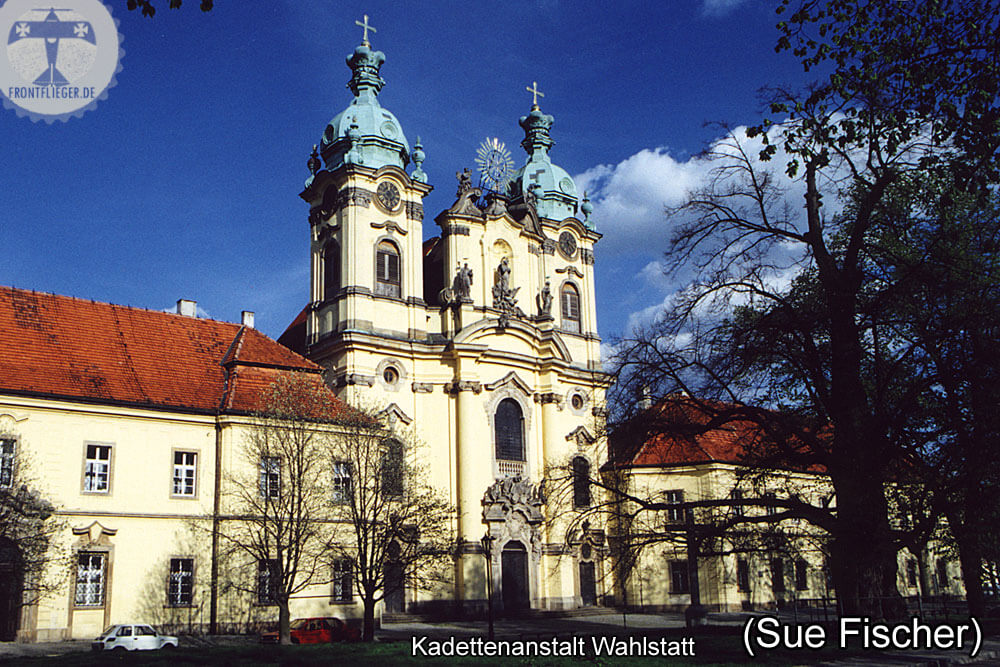
Kadettenanstalt Wahlstatt
Legnickie Pole
Wahlstatt
‘I later became a cadet in Wahlstatt. But the people of Schweidnitz regard me as a child of Schweidnitz. The cadet corps prepared me for my current profession and I then joined the 1st Uhlan Regiment.’
MvR joins military cadets in Wahlstatt

MvR joins military cadets in Wahlstatt

Der rote Kampfflieger von Rittmeister Manfred Freiherrn von Richthofen, 1917, 351.000 - 400.000, Verlag Ullstein & Co, Berlin-Wien p. 12
August 1, 1903
1903-1909
Kadettenanstalt Wahlstatt
Legnickie Pole
Wahlstatt
‘I joined the cadet corps as a young sixth-former. I wasn't overly keen on being a cadet, but it was my father's wish and so I wasn't asked for much. The strict discipline and order was particularly difficult for such a young badger. I wasn't particularly keen on lessons. I was never a great lumen. I always did as much as I needed to in order to be promoted, but I didn't think I could do any more and I would have considered it nerdy if I had done better than ‘sufficient’ in class. The natural consequence of this was that my teachers didn't hold me in high esteem. On the other hand, I liked sports: Gymnastics, playing football, etc., immensely. I don't think there was a single wave I couldn't do on the gymnastics bar. I was soon awarded several prizes by my commander. All the breakneck moves impressed me enormously. For example, one fine day I crawled up the famous church tower of Wahlstatt on the lightning conductor with my friend Frankenberg and tied a handkerchief to the top. I still remember exactly how difficult it was to get past the gutters. When I visited my little brother once, about ten years later, I could still see my handkerchief hanging at the top. My friend Frankenberg was the first victim of the war that I ever saw.’

At that time he wanted to be a great cavalry general

Der rote Kampfflieger von Rittmeister Manfred Freiherrn von Richthofen, 1933, Eingeleitet und ergänzt von Bolko Freiherr von Richthofen, mit einem Vorwort von Generalfeldmarschall Hermann Göring, Verlag Ullstein & Co, Berlin
August 1, 1903
1903-1909
Kadettenanstalt Wahlstatt
Legnickie Pole
Wahlstatt
That's how Manfred got through his time as a cadet, even though this type of education and youthful treatment didn't suit him too well. But he gritted his teeth and never complained during all the holidays he spent at his parents' house. However, he told me, his younger brother, on several occasions: ‘If you can, do without the pleasure, it's not nice in the pub either, but it's still better.’ Manfred had decided very early on that he wanted to be an officer, and he had probably always been determined to achieve extraordinary things in the career he had chosen. At that time, however, he was thinking of becoming a great cavalry general. Little did he realise that he would become the first not on terra firma, but in the skies.

In memory of Richthofen. By v. B.

Ein Heldenleben, Ullstein & Co, 1920 p. 313
August 2, 1903
1903-1908
Kadettenanstalt Wahlstatt
Legnickie Pole
Wahlstatt
‘Captain Freiherr von Richthofen has not returned.’ So reports the army bulletin, succinctly and bluntly. So it has happened after all! What no one dared to think about has come to pass, what every German felt with quiet trepidation when Richthofen's aerial victories reached the eerie height of eighty. The greatest flying ace of the World War died undefeated, a glorious death for the Kaiser and the Fatherland. An unspeakable pain pierces the hearts of our people at the loss of this bravest of the brave. As a true soldier, he rests in foreign soil where he fell. We were not granted the privilege of firing three volleys of honour over his grave. When I see the mighty towers of the venerable monastery church of Wahlstatt glimmering in the distance today, old, long-forgotten images come to mind. Richthofen and I wore the king's uniform at the same time and were cadets at Wahlstatt. I had just joined the corps, a cheeky ten-year-old boy. Manfred Richthofen was several grades above me, and as a puny newbie, as the cadets called the newcomers, I would hardly have come into closer contact with him. But it did happen once – in a rather rough manner, which is now a fond memory for me. My room elder was a close friend of Richthofen's, and he often sat in our room in the evenings. However, this friendship was clouded for some reason, so that both had pax ex, as we called it. Our room elder now tried to annoy Richthofen at every opportunity. Carnival had arrived, and the parcels from home with the eagerly awaited pancakes had arrived. The senior member of our room had had a huge jumping jack sent to him in the form of a life-size Negro, which aroused our greatest astonishment, for there were no carnival jokes or masquerades. But we soon guessed what was going on. One of us was supposed to secretly hang the Negro on Richthofen's locker door. My blood was boiling at the time, and I was looking for an opportunity to distinguish myself. The bright red, grinning mouth of the negro, which stretched from ear to ear, was intended to provoke Richthofen – that was the main point! Manfred Richthofen had a full, strong mouth, which our dormitory leader always teased him about. We were sitting down to supper, so I sneaked out of the dining room as quickly as possible. I scurried across the company quarters with the negro I had fetched to the room where Richthofen was lying. Soon the snarling black man was dangling from the cupboard door, Richthofen's nameplate emblazoned above his woolly head like an explanation. But the consequences were inevitable. Richthofen guessed where the negro had come from and also found out who had brought him. And then in the evening, I can still see it today, the door opened. Richthofen stood in the room, his steel-blue eyes, which meant nothing good for me at the time, searching the room. Now he had spotted me. The next moment he was standing in front of me – there was a crash on the left, a crash on the right – and then, as calmly as he had come, he left the room amid the respectful silence of his comrades. It is a strange memory! – That was the hand that later held the controls so firmly and sent eighty enemies to their deaths!"
Knee injury in the cadet corps

Der rote Kampfflieger von Rittmeister Manfred Freiherrn von Richthofen, 1933, Eingeleitet und ergänzt von Bolko Freiherr von Richthofen, mit einem Vorwort von Generalfeldmarschall Hermann Göring, Verlag Ullstein & Co, Berlin
September 1, 1903
Kadettenanstalt Wahlstatt
Legnickie Pole
Wahlstatt
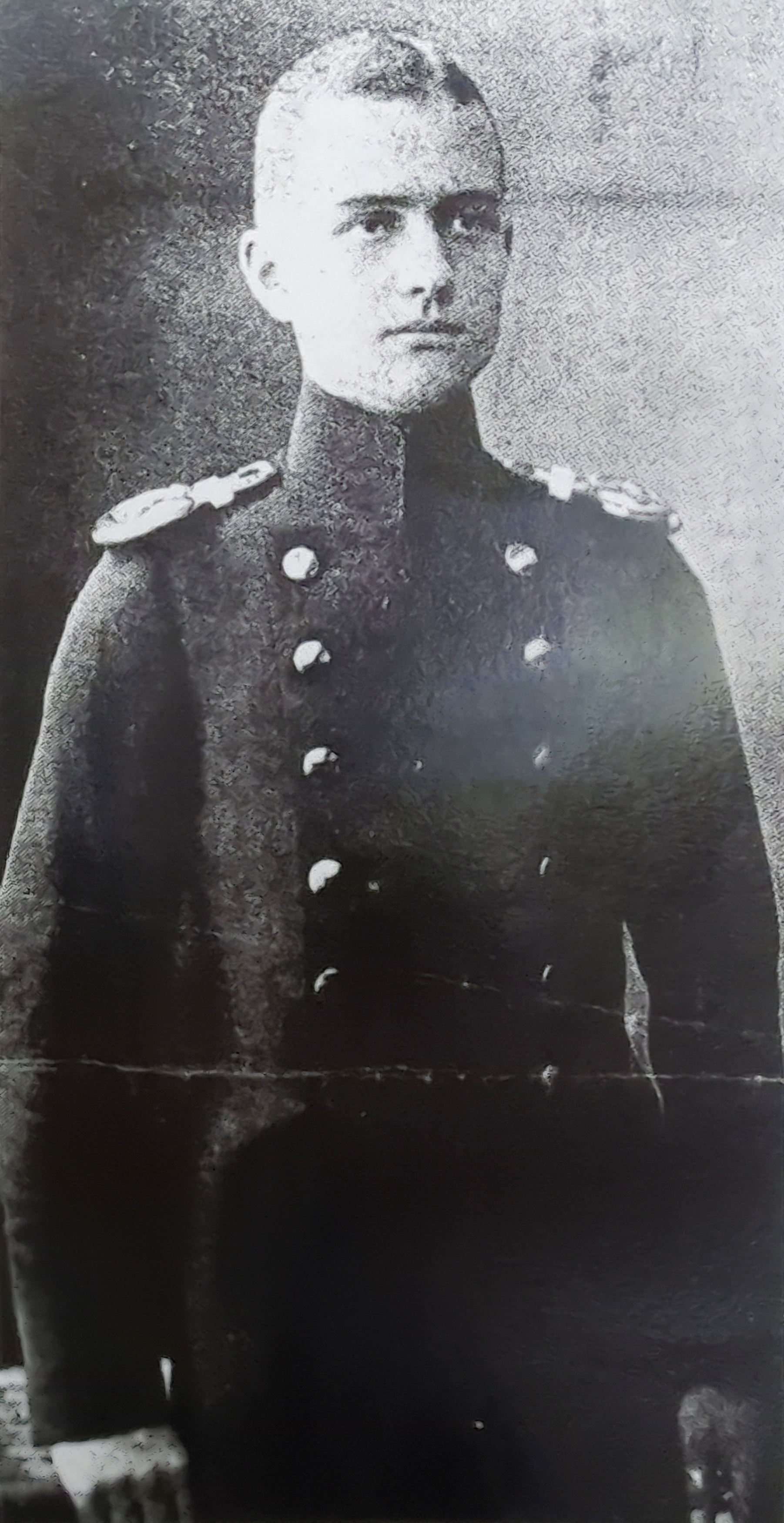
Manfred only caused my parents serious concern once. He had suffered a serious knee injury in the cadet corps. A piece of cartilage in his knee had torn loose during a fall squat without assistance. This piece occasionally became wedged between the kneecap, causing the leg to fold to one side without any willpower. Massages and all kinds of cures didn't help; years and days went by and the leg wouldn't get better. When my parents were once again discussing what to do, and my mother in particular was very depressed, Manfred wanted to comfort her and said: ‘If I can no longer walk on my legs, I'll walk on my hands!’. And like a completely healthy person, he stretched both legs into the air and walked around the room on his hands. In the end, however, the decision was made to operate. Fortunately, this was successful and restored him to full health within a few weeks.

Birthday of Kaiser Wilhelm II

Die Erinnerungen der Mutter des roten Kampffliegers Kunigunde Freifrau von Richthofen. Im Verlag Ullstein - Berlin, 1937. p. 52
January 27, 1904
1903-1908
Kadettenanstalt Wahlstatt
Legnickie Pole
Wahlstatt
Twelve years ago, Manfred had travelled this route and I had visited him many times. I really liked the spirit of the school. The boys had to study hard, but they looked healthy because they did gymnastics diligently (Manfred's strong side). When he was still a toddler, it was no trouble at all for him to shoot rumps from a standing position, and he never needed his hands to do so, but placed them tightly against the seam of the yard. He had a wonderfully skilful body by nature. Once, when he was eight years old, he had to take apples from an old, hard-to-reach fruit tree. He scrambled up like a little man of the woods and didn't come down the trunk afterwards, no, that way was too boring for him; instead he let himself down on the outside of the branches, swinging and grabbing from branch to branch with lightning-like speed. These gymnastic skills stood him in good stead at the cadet school. He was honoured several times. There was also a lot of fun for us adults here in Wahlstatt. Once I went along to an imperial birthday party. Beforehand, Manfred had explained the following to me with a serious face: ‘You know, Mum, the cadets like to dance with every lady who still looks a bit young and pretty...only with the old and ugly mothers - the officers dance with them.’ Intimidated by these unsuccessful but life-knowledgeable openings, I asked my cadet son what I should wear to make myself desirable. ‘Well, a really light-coloured dress with a pretty flower on the belt.’ I took this to heart and was curious to see whether the gentlemen cadets would also like me. But - I was lucky, they danced with me first and not the officers. As a thank you, we then let our young cavaliers indulge in pancakes. What were the giant snuffles of these fragrant bales back then? That was something for Manfred - his favourite pastry; he was very reluctant to eat meat, preferring bread and cake instead.

Manfred was extremely truthful

Der rote Kampfflieger von Rittmeister Manfred Freiherrn von Richthofen, 1933, Eingeleitet und ergänzt von Bolko Freiherr von Richthofen, mit einem Vorwort von Generalfeldmarschall Hermann Göring, Verlag Ullstein & Co, Berlin p. 21
May 2, 1904
Władysława Sikorskiego 19, 58-105 Świdnica, Polen
Swidnica
Schweidnitz
Manfred was extremely truthful. Even today, my mother cannot praise the extent to which my parents could always rely on him. He gave precise and clear answers to every question, regardless of what the consequences might be for him. As a twelve-year-old boy, he was once unable to curb his passion for hunting on his grandmother's estate. When he couldn't find any wild ducks on the Weistritz, he shot some tame ones, which were then missing from his grandmother's duck pen. Manfred was put under strict interrogation, but it only lasted half a minute. It didn't occur to him to deny or even gloss over what he had done. And the good grandmother gladly forgave her grandson, who could not lie. Manfred's first ‘hunting trophies’, three drake feathers, still hang in his parlour in Schweidnitz today. Visitors will not be able to look at them without emotion. Manfred's mother summarised these feelings and this conviction of Manfred's nature in the short words: ‘He stood firm, wherever he was placed.’ This belief in his own ability, coupled with inner nobility and self-evident modesty, enabled my brother, I believe, to be a real leader. His Uhlans, when he was a lieutenant, and later all his subordinates in the Richthofen fighter squadron could trust him implicitly. He did not flatter them, but he protected them and kept his word, and serving under him was made easier by the cheerfulness and cheerfulness, indeed often by the exuberance with which he showed himself equal to even the most difficult tasks. For in one thing he was a perhaps unparalleled example to all who had to follow him in war: in the bravery of his spirit, in the absolute lack of any fear, indeed in the complete impossibility of being able to imagine any process or impending event that could be associated with any feeling of fear for him.

The manor house is haunted

Der rote Kampfflieger von Rittmeister Manfred Freiherrn von Richthofen, 1933, Eingeleitet und ergänzt von Bolko Freiherr von Richthofen, mit einem Vorwort von Generalfeldmarschall Hermann Göring, Verlag Ullstein & Co, Berlin p. 23
May 2, 1905
Władysława Sikorskiego 19, 58-105 Świdnica, Polen
Swidnica
Schweidnitz
He didn't underestimate the danger, but it didn't play a role in his life. That was the case from an early age. The girls claimed that the manor house was haunted. A servant had once hanged himself on the floor upstairs and it had been haunted ever since, so they said in the servants' parlour. Thirteen-year-old Manfred wanted to experience this haunting. He asked to be shown the exact spot on the floor where the accident had happened and had his bed carried to the spot to sleep. My mother knew Manfred's fearlessness, but she decided to put him to the test. She crept upstairs with my sister and gradually began to roll chestnuts along the floor. At first Manfred slept soundly. But the thumping increased. Then he suddenly woke up, jumped up, grabbed a truncheon and lunged at the troublemakers. My mum had to switch on the light quickly, otherwise she would have had a bad time. But there was no sign of fear in Manfred. And that didn't change until his last flight, from which he was never to return alive to his squadron and his own.
MvR joins military cadets in Lichterfelde

MvR joins military cadets in Lichterfelde

Der rote Kampfflieger von Rittmeister Manfred Freiherrn von Richthofen, 1917, 351.000 - 400.000, Verlag Ullstein & Co, Berlin-Wien p. 13
January 1, 1909
1909-1911
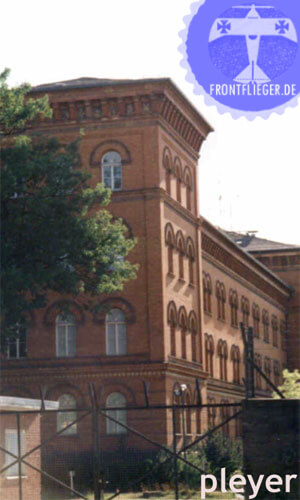
Hauptkadettenanstalt Lichterfelde
Lichterfelde
‘I liked it a lot better in Lichterfelde. I was no longer so cut off from the world and began to live a little more as a person. My favourite memories from Lichterfelde are the big corso games, where I fought a lot with and against Prince Friedrich Karl. The prince won many a first prize back then. In races, football matches, etc. against me, who had not trained my body to such perfection as he had.’

hunting trophy

Richthofen, der beste Jagdflieger des großen Krieges, Italiaander, A. Weichert Verlag, Berlin, 1938 p. 132
December 27, 1910
Jordanow Slaski
Feldmark Jordansmühl
It is hereby certified that His Royal Prussian Cadet Manfred Freiherr von Richthofen, in the presence of over 100 witnesses, most of whom are of impeccable character, shot and killed 20 hares and 1 pheasant (male) with his own hands today on the Jordansmühl field. The accuracy of this statement is certified by (many names follow).
MvR joins Ulanen-Regiment „Kaiser Alexander III. von Rußland“ (Westpreußisches) Nr. 1

MvR joins Ulanen-Regiment „Kaiser Alexander III. von Rußland“ (Westpreußisches) Nr. 1

Der rote Kampfflieger von Rittmeister Manfred Freiherrn von Richthofen, 1917, 351.000 - 400.000, Verlag Ullstein & Co, Berlin-Wien p. 14
April 17, 1911
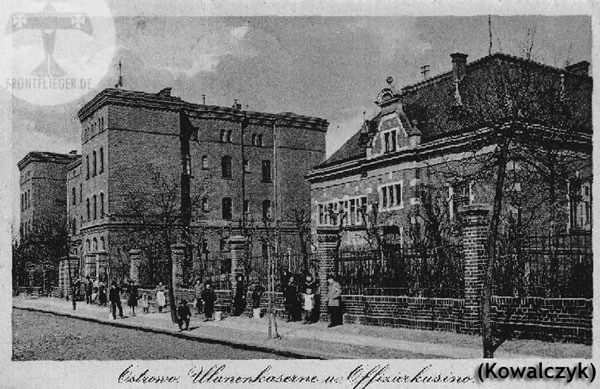
Ostern 1911
Ulanen-Regiment „Kaiser Alexander III. von Rußland“ (Westpreußisches) Nr. 1
Milicz
Militsch
‘Of course, I could hardly wait to join the army. That's why I went to the front after my midshipman's examination and joined the Uhlan Regiment No. 1 ‘Kaiser Alexander III’. I had chosen this regiment; it was in my beloved Silesia and I had some friends and relatives there who strongly recommended it to me, and I really enjoyed serving with my regiment. It's the best thing for a young soldier to be a ‘cavalryman’. I can't really say much about my time at war school. It reminded me too much of the cadet corps and, as a result, I don't have very fond memories of it. I did experience one funny thing. One of my war school teachers bought himself a really nice fat mare. The only flaw was that she was a bit old. He bought her for fifteen years. She had slightly thick legs. But otherwise she jumped excellently. I rode her a lot. She went under the name ‘Biffy’.’

MvR on the hunt

Die Erinnerungen der Mutter des roten Kampffliegers Kunigunde Freifrau von Richthofen. Im Verlag Ullstein - Berlin, 1937. p. 130
April 18, 1911
exact date?
Ostrowo
Ostrowo
‘A memory came back to me. Even when Manfred was attending war college in Gdansk, he had hunted in East Prussia, and something happened at that time that got me excited. In the evening, his gamekeeper had shown him the hunting ground where he was to shoot a buck the next morning. Should he be given a hunter with him? No, thanks, he - Manfred - would find the stalking path on his own. The next morning is pitch dark. Manfred misses the direction in the darkness. He has completely lost his way in the large forest. Finally he arrives at a farmstead that lies alone in the forest. Here he has to ask for directions. The inhabitants are still fast asleep, no smoke curls over the moss-covered roof. Manfred knocks on a window, the dogs bark. Suddenly a gate opens and at the same moment two shots ring out. The coarse shot rattles in his ears. He had been mistaken for a burglar. Fortunately, the mistake was soon cleared up. The strange hunter was kindly shown the way and the buck was there for breakfast.’

Biffy

Der rote Kampfflieger von Rittmeister Manfred Freiherrn von Richthofen, 1917, 351.000 - 400.000, Verlag Ullstein & Co, Berlin-Wien p. 14
April 17, 1912
Etwa ein Jahr später
Ulanen-Regiment „Kaiser Alexander III. von Rußland“ (Westpreußisches) Nr. 1
Milicz
Militsch
‘About a year later at the regiment, my Rittmeister v. Tr., who was very fond of sport, told me that he had bought a very chunky jumper. We were all very excited about the ‘chunky jumper’, who bore the rare name ‘Biffy’. I no longer thought about my war school teacher's old mare. One fine day the wonder animal arrived, and now imagine the astonishment that good old ‘Biffy’ found herself back in Tr's stable at the age of eight. She had changed hands several times in the meantime and her price had risen considerably. My war school teacher had bought her for fifteen hundred marks, and v. Tr. had bought her after a year as an eight-year-old for three thousand five hundred marks. She didn't win any more jumping competitions, but she found a buyer again - and was killed right at the beginning of the war.’

MvR appointed Leutnant

https://en.wikipedia.org/wiki/List_of_victories_of_Manfred_von_Richthofen
November 19, 1912
Ostrowo
Ostrowo
MvR appointed Leutnant and in the 3rd squadron in Ostrowo
First period as an officer

First period as an officer

Der rote Kampfflieger von Rittmeister Manfred Freiherrn von Richthofen, 1917, 351.000 - 400.000, Verlag Ullstein & Co, Berlin-Wien p. 16
November 19, 1912
Herbst 1912
Ostrowo
Ostrowo
‘I finally got the epaulettes. It was about the proudest feeling I've ever had to be called ‘Mr Lieutenant’ all at once. My father bought me a very beautiful mare called ‘Santuzza’. She was a marvellous animal and indestructible. Walked like a lamb in front of the train. I gradually discovered that she had great jumping ability. I immediately decided to make a show jumper out of this good mare. She jumped marvellously. I jumped a paddock trick of one metre sixty centimetres with her myself. I found a great deal of support and understanding from my mate von Wedel, who had won many a nice prize with his chargen horse ‘Fandango’. So we both trained for a show jumping competition and a cross-country ride in Breslau. ‘Fandango’ did brilliantly, ‘Santuzza’ tried hard and also did well. I had the prospect of doing something with her. The day before she was loaded, I couldn't resist taking her over all the obstacles in our jumping garden again. We slipped and slid. Santuzza' bruised her shoulder a little and I banged my collarbone. I also demanded speed from my good fat mare ‘Santuzza’ in training and was very surprised when von Wedel's thoroughbred beat her. Another time I was lucky enough to ride a very nice chestnut at the Olympics in Wroclaw. The cross-country started and my gelding was still alive and kicking in the second third, so I had a chance of success. Then came the last obstacle. I could see from a distance that this must be something very special, as a huge amount of people had gathered there. I thought to myself: ‘Take courage, things will go wrong!’ and came hurtling up the embankment, on which stood a paddock trick. The crowd kept waving at me to stop riding so fast, but I couldn't see or hear anything. My chestnut takes the paddock trick at the top of the dam and, to my utter amazement, it goes into the Weistritz on the other side. Before I knew it, the animal jumped down the slope in one giant leap and horse and rider disappeared into the water. Of course we went ‘overhead’. ‘Felix’ came out on this side and Manfred on the other. When they weighed me back at the end of the cross-country ride, they were astonished to see that I hadn't lost the usual two pounds, but had gained ten pounds. Thank goodness you couldn't tell that I was soaking wet. I also had a very good Charger and this unfortunate animal had to do everything. Running races, cross-country riding, jumping competitions, walking in front of the train, in short, there was no exercise in which the good animal was not trained. That was my well-behaved ‘Blume’. I had very nice successes on her. My last was in the Kaiserpreis-Ritt in 1913, when I was the only one to complete the cross-country course without making a mistake. One thing happened to me that won't be repeated so easily. I galloped over a heath and was suddenly upside down. The horse had stepped into a hole in the harness and I had broken my collarbone in the fall. I'd ridden another seventy kilometres, hadn't made a mistake and had kept time.’

Showing 24 of 791 events

This archive experience was crafted by Hein Poblome with care, patience, and a great deal of time. If you enjoy the work and would like to support the project, buying him a coffee is a wonderful way to help. Support on Buy Me a Coffee